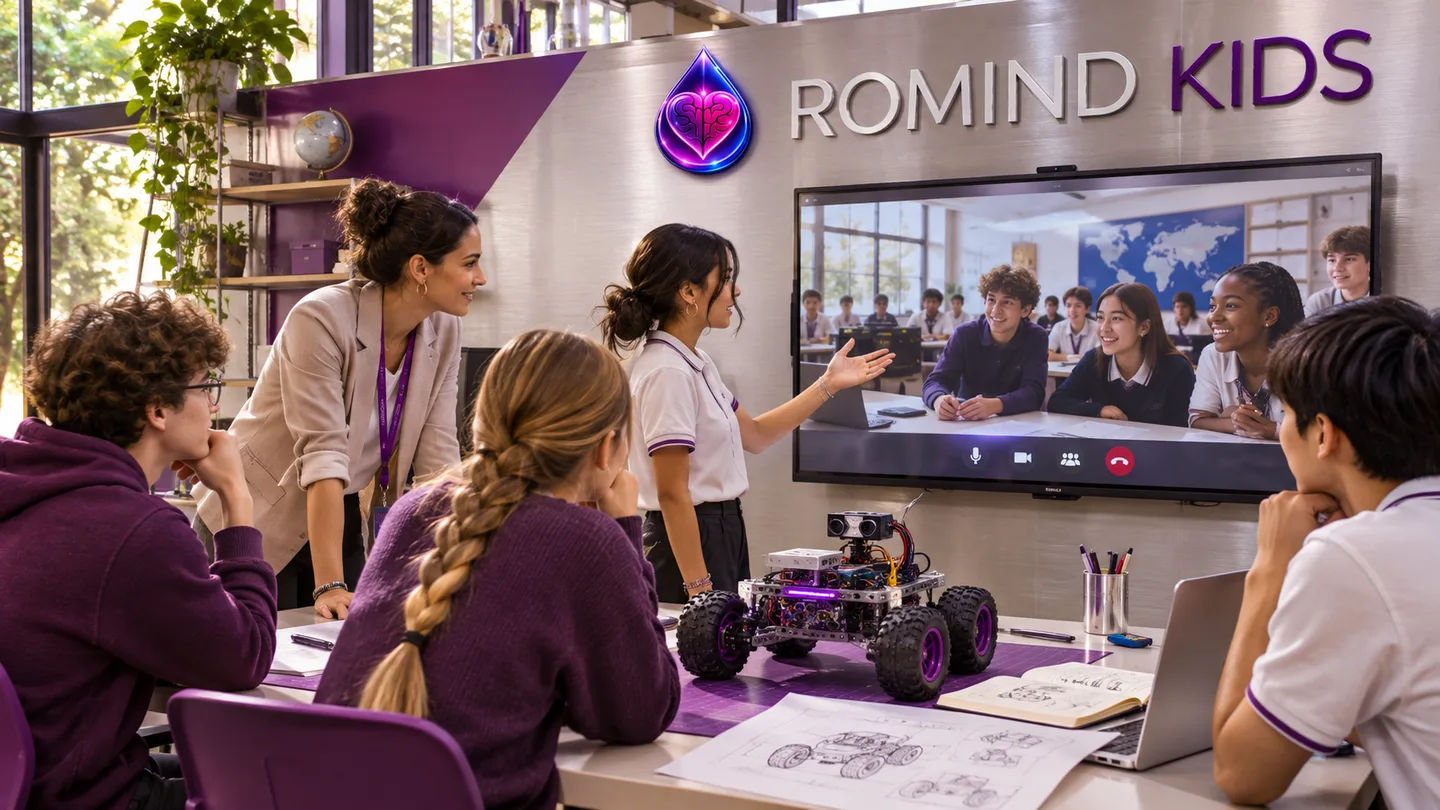
What the school receives
The school keeps its curriculum and chooses a theme, age group and coordinator. ROMIND helps plan activities, select clubs and Academy assignments, and prepare instructions and a partner link or code. Teachers can show families the journey from first draft to presentation. Together we agree which work may be shown and how the school is credited.
From idea to portfolio
Children aged 9–11 can start with short creative tasks in pairs. At 12–14, students can share roles, refine a prototype and present their work. With family consent, the finished project can become part of a child's portfolio.
Four weeks together
Start with 30–50 families or a smaller group. In week one we agree on the theme, age group and coordinator. The school invites parents in week two. Students build their project in week three. In week four teachers and families review the results and decide how to continue.
How families join
Parents register voluntarily using the school's link or code. Schools do not need to share student lists. Subject to availability, the first 100 families in the programme can receive 90 days of free access without automatic renewal.
Terms for schools
There is no mandatory upfront fee. We offer schools up to 25% of net subscription revenue from each referred family for the first 12 months of its paid subscription, after taxes, fees and refunds. The agreement sets the rate, referral tracking and payment terms.
How progress is tracked
At the end of the pilot we review participating families, completed work, feedback from teachers and parents, and interest in continuing. Student messages stay private. Partner codes or links identify family referrals and accounting uses actual paid subscriptions. Reconciliation and payment schedules are agreed in writing before launch.
What is agreed before launch
We agree dates, responsibilities, available tools, family access and permissions for showcasing work. Participation is voluntary. KIDS provides RONI, reporting, blocking and limits on sharing personal information. School and ROMIND decide together whether to continue. Scholarships, investment, admission and employment have separate selection processes.
 ROMIND